
The East African tech ecosystem is evolving rapidly. From fintech disruptors managing mobile money integrations to agritech platforms handling real-time data, the demand for robust, scalable cloud infrastructure has never been higher. Whether a startup is scaling its operations out of a major hub like Nairobi or a dev team is building and testing microservices right here in Entebbe, the infrastructure requirements remain the same: high performance, absolute reliability, and cost predictability.
While hyperscalers like AWS and Google Cloud dominate the global conversation, they often bring steep learning curves and notoriously complex billing models. Enter Vultr, a cloud provider that has quietly become a favorite for us here at TheTechToolstack for developers and businesses looking for raw performance without the enterprise bloat.
Here is an insightful look at why Vultr is increasingly becoming the go-to infrastructure choice for the East African market.
Developer-Centric Simplicity and Speed
Time to market is critical for local developers. Vultr’s primary advantage is its clean, intuitive control panel and highly documented API. Developers can deploy a compute instance (VPS) in roughly 60 seconds.
Instead of navigating a maze of IAM roles and convoluted VPC setups just to launch a simple server, Vultr allows teams to focus on code. With one-click apps, developers can instantly provision environments pre-configured with Docker, LAMP stacks, or Kubernetes, drastically reducing configuration time. For agile teams in East Africa, this means fewer hours spent playing sysadmin and more hours building products tailored to local challenges.
High-Performance Compute at Predictable Prices
Currency volatility against the US Dollar is a real concern for businesses operating in East Africa. Budgeting for cloud infrastructure can be a nightmare when dealing with the unpredictable bandwidth egress fees typical of major hyperscalers.
Vultr operates on a transparent, flat-rate pricing model. Businesses know exactly what their monthly overhead will be. Furthermore, Vultr’s deployment of High Frequency Compute instances, powered by high-clock-speed CPUs and NVMe solid-state storage, delivers exceptional benchmark performance. For a local e-commerce platform handling sudden traffic spikes during a flash sale, or a logistics app processing real-time driver coordinates, this raw compute power ensures the application remains responsive.
Latency, Routing, and the African Footprint
For applications serving users in East Africa, network latency is a crucial metric. Historically, African traffic was routed through European servers, leading to sluggish application performance.
Vultr has been actively expanding its global footprint, notably with its data center in Johannesburg. By leveraging localized nodes and optimized routing through major undersea cables (like SEACOM), Vultr significantly reduces the round-trip time for data. This proximity is a game-changer for latency-sensitive applications like VoIP services, multiplayer gaming, or real-time financial trading platforms operating across the East African region.
Scalability from Startup to Enterprise
A common trap for growing businesses is choosing a provider that works well for a prototype but falls apart at scale. Vultr bridges this gap seamlessly.
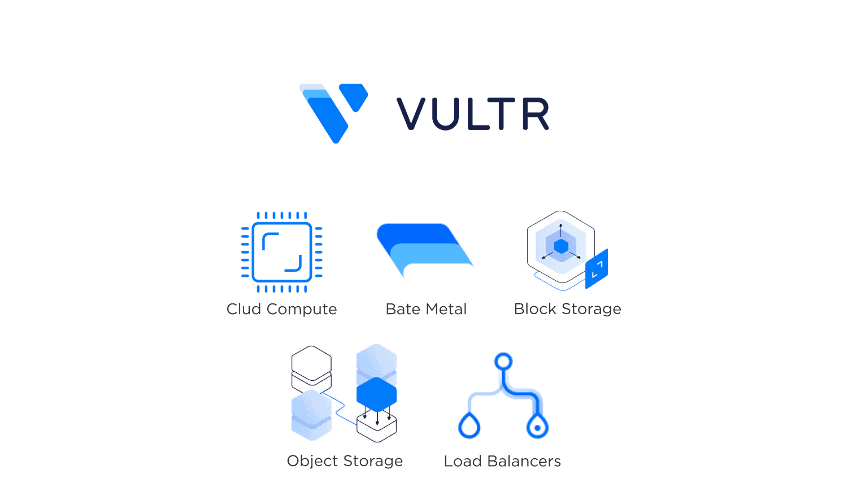
A solo developer can start with a basic $5/month instance to host a minimum viable product (MVP). As the business gains traction, they can seamlessly scale up to Dedicated Cloud instances, Bare Metal servers, or highly available Kubernetes clusters. This elastic scalability means a business never has to undergo a painful migration to a new provider just because they outgrew their initial server.
Fostering a Modern Tech Stack
Vultr doesn’t just provide virtual machines; it provides the building blocks for modern cloud-native architectures. With native support for block storage, object storage (S3-compatible), and managed databases, engineering teams in Uganda, Kenya, Tanzania, and Rwanda can architect applications using global best practices without the heavy lifting of database administration.
The Verdict for East African Innovators
For the developers writing code and the businesses deploying solutions across East Africa, infrastructure should be an enabler, not a bottleneck. Vultr strikes a rare balance: it offers the raw power and modern tooling required by senior engineers, paired with the straightforward pricing and ease-of-use demanded by lean startups.
If your team is looking to optimize its cloud architecture, reduce monthly infrastructure bills, and improve application speed, evaluating Vultr is a highly recommended next step for your tech stack.